Are you constantly searching for answers to “travel to Israel,” “is it safe to travel to Israel,” or even “why should I travel to the Holy Land?” If so, you’re in good company. But how do you move from endless googling to actually going? Most of us don’t willingly walk into the unknown unless you’re Nachshon, son of Amminadab, who famously took a leap of faith right into it.
The Man Who Jumped
Nachshon, son of Amminadab, may not be a familiar biblical character to you. While he is mentioned in Numbers 7:10 –17, his story actually comes to us from Jewish tradition, specifically the Talmud and Midrash. Nachshon was the brother-in-law of Aaron, the first High Priest, and he is known as the man who JUMPED into the Red Sea when everyone else hesitated.
The story goes that seven days after leaving Egypt under Moses’ leadership, the Israelites found themselves between a rock (the Egyptian Army) and the Red Sea. When Moses commanded them to move into the sea, all the tribes on the shore hesitated; but Nachshon, a prince of the tribe of Judah, seeing the others falter, took the leap of faith God required. (Altein, 2023)
Israelis often mention Nachshon’s name as a symbol of someone who left an unforgettable imprint on their nation. (Who is the most popular Biblical figure?, 2013) After Nachshon’s bold leap, the rest of the tribes found their courage, started into the water, and after that God parted the sea so the Israelites could cross on dry land. I can’t help but admire Nachshon! He embodied the kind of faith Martin Luther King described: taking the first step without seeing the whole staircase. He seems to be just the sort of faithful soul God seeks—someone who says, “Yes, Lord…now what is the question?” Bible passages and accounts like Nachshon’s come alive when they are studied in the Holy Land!
If you sense God nudging you to visit the land where His Son once walked—a journey I believe will draw you closer to the Lord, transform the way you read the Bible, and make God’s work in this world feel more tangible—then take that leap of faith.
Just as faith compelled Nachshon to take that first step, faith can also motivate us to take practical action. Once you feel that inner nudge to visit the Holy Land, channel that inspiration into your plans: research trusted tour groups, talk with others who have traveled, plan for safety, and pray for wisdom as you decide. Courage rooted in faith can become the foundation for real steps that turn your hopes into a life-changing journey.

Blessings Abound
God’s Word foretells that this tiny stretch of land—the modern state of Israel—will always make headlines. From Genesis to Revelation, God calls Israel His Chosen Nation, the apple of His eye. This special status has brought not only anti-Semitism, wars, holocausts, and hatred, but also blessings. Wait—blessings? Yes, even blessings! The Bible promises blessings for those who pray for Israel, stand with her, ally with her (Genesis 12:3), and yes, even for those who journey to Israel.
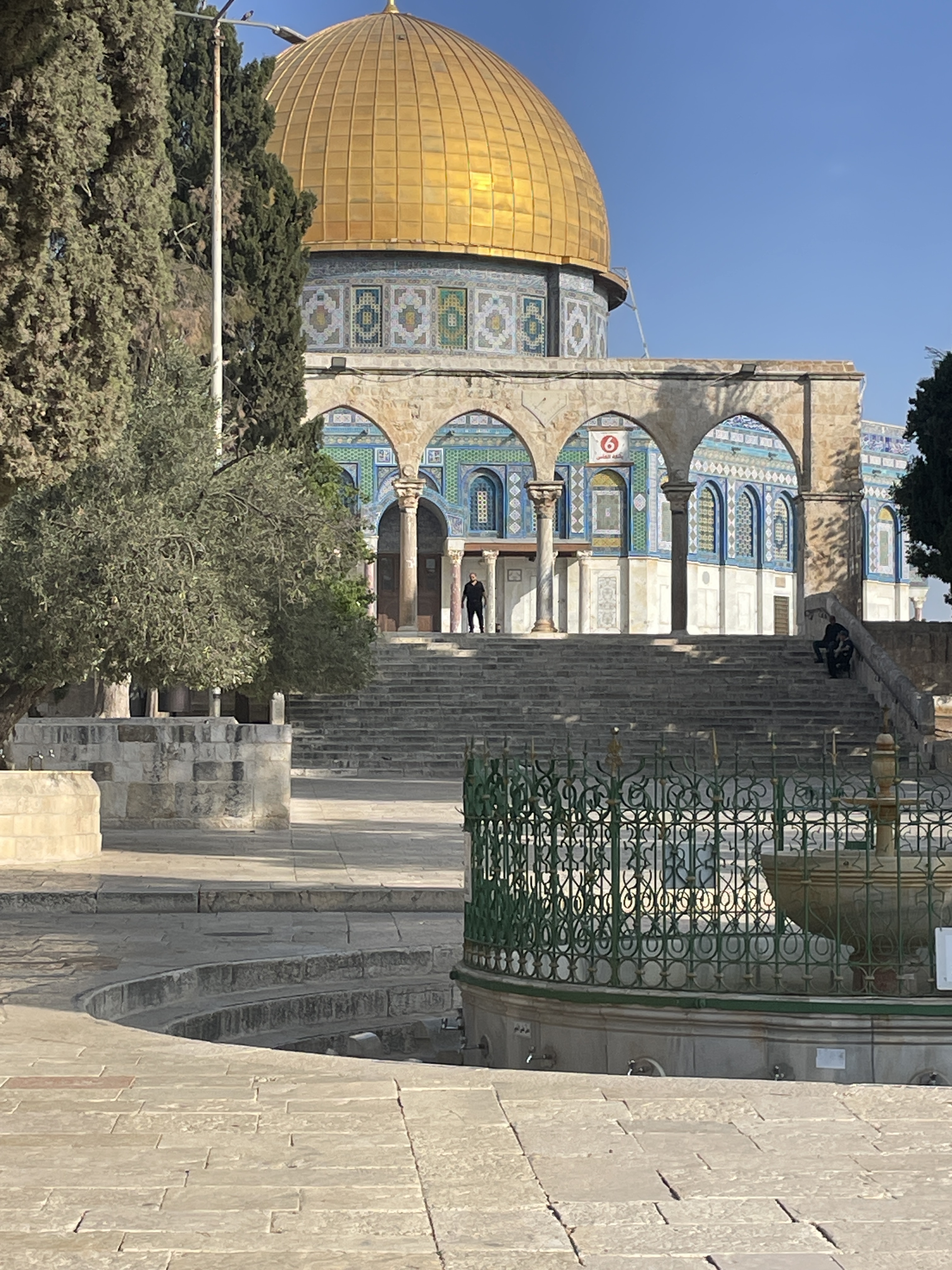
I had the blessing of returning to Israel in October 2026. As always, I journeyed with my trusted guide, Ezer Kalmovitcz, and in the company of over 50 fellow Holy Land travelers. For 12 days, we explored my favorite places—sites where Rich once shared messages, and where we introduced friends and family to the land where Jesus walked. From Jerusalem to Caesarea, the Temple Mount to the Mount of Olives, the Sea of Galilee, to Masada, the Dead Sea, and south to Eilat, Petra, and Mount Sinai, every moment was calm and peaceful, free from worry.
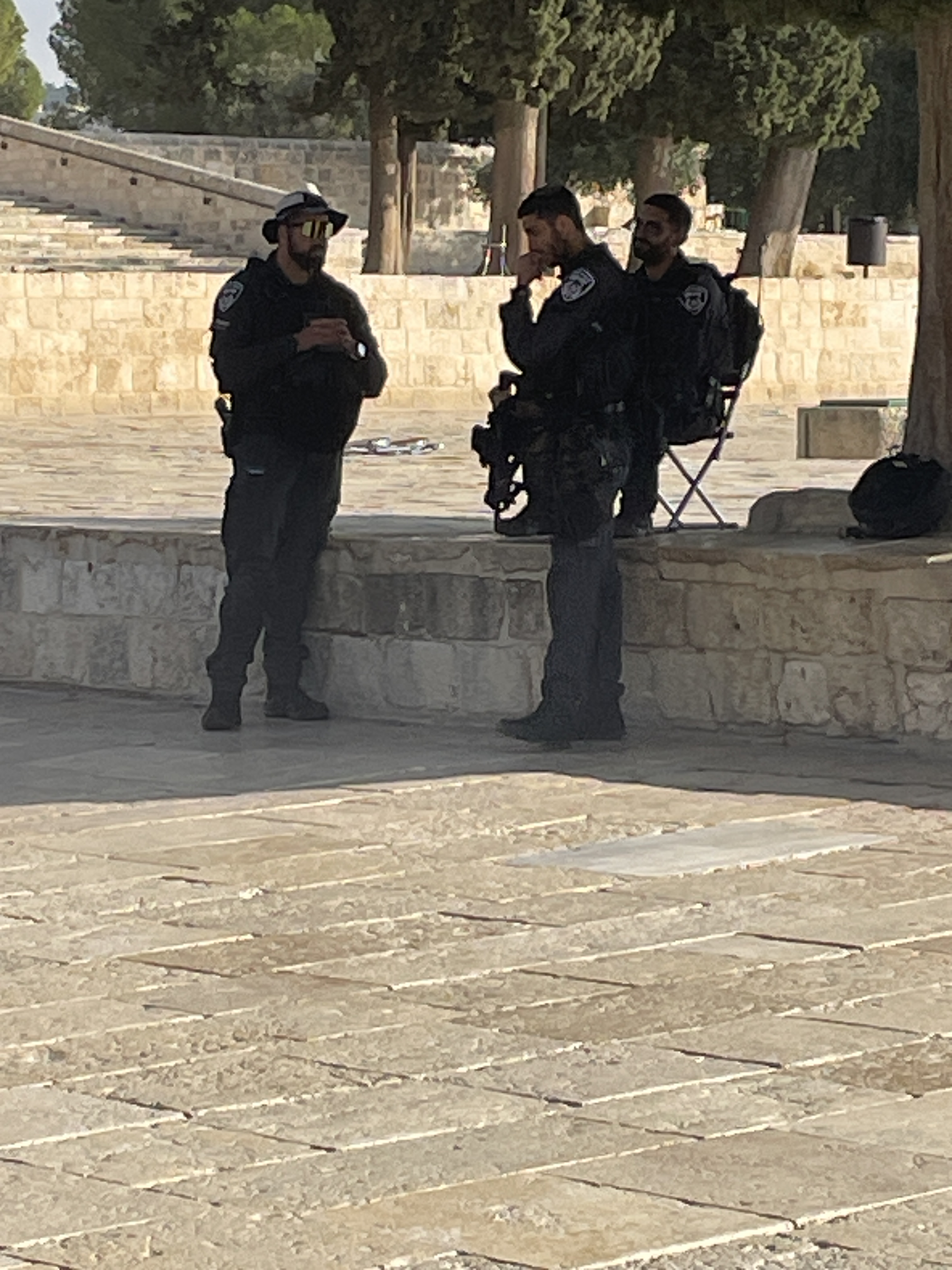
This year, however, brought some notable changes due to recent events and updated safety advisories. I noticed more visible Israeli security and military presence in the Old City of Jerusalem, on the Temple Mount, and at the Western Wall. New advisories and regional tensions, especially after the 2026 conflict with Iran, mean access to some areas may be more limited, and tourists should expect extra security screenings and occasional itinerary changes as needed.
Rather than raising safety concerns, the security presence made me feel more secure. In addition, security was visible at each hotel, checking visitors and buses. Travelers should be prepared for increased vigilance, but these measures are there to ensure everyone’s safety, and in my experience, they provided reassurance rather than anxiety.
My decision to travel this year was shaped by experience—ten trips in total—and I have never once felt unsafe. For those new to the Holy Land, the unknowns can feel daunting. But I can promise you: a visit to the Holy Land will change you, and perhaps anticipating the extraordinary blessings will tip the scales.
What To Know
So, is it safe to travel to Israel, the Holy Land? The answer is yes—with a few important caveats. Most trips focus on historic religious landmarks like Old Jerusalem, the Western Wall, the Temple Mount, the Mount of Olives, the Garden Tomb, Capernaum and the Mount of Beatitudes by the Sea of Galilee, Caesarea on the Mediterranean, and Mount Carmel in the Central Valley. Archaeological digs are on every itinerary and tourists are continually amazed by these excavations that confirm the Biblical accounts and the continued presence of God’s People in the Holy Land. In addition, no tour is complete without vists to the natural wonders of Israel, the Qumran caves, the Dead Sea, En Gedi, and Masada—you can rest assured that all of the above, from north to south, are among the safest places you can visit in the Holy Land.
The caveats involve non-biblical areas and some Old Testament sites, including Abraham’s Tomb, Shechem, Hebron, Jericho, and even Bethlehem, which lie in the West Bank and should be visited with caution. While foreign governments rarely include Israel proper in travel alerts, that has recently changed to a “reconsider travel” level 3 advisory and, without exception, all travel advisories specifically warn against visiting the Gaza Strip and the West Bank (which includes Biblical Samaria).
To stay informed, check travel advisories from reliable sources such as your government’s Department of State (for U.S. travelers: travel.state.gov), the UK Foreign Office, or the Israeli Ministry of Tourism website. These websites offer the latest guidance on which areas to avoid, security situations, and other essential information so you can make wise, well-timed travel decisions.
Politics and Peace
The truth is, the Holy Land remains a secure and welcoming destination for travelers. While the region’s politics have always been tense, once you arrive and meet Israelis and Palestinians, you’ll discover that most people simply want what we all do: to raise families, earn a living, educate their children, and enjoy their homes and communities.
Politically, there are serious and substantial issues of hegemony, not to mention territorial and citizenship concerns that need to be resolved before even a fragile peace in the Middle East emerges as a possibility. Bringing the Palestinian issue to a resolution does not enhance the political ambitions of Arab nations surrounding Israel; apparently it is better for their governments that the “two state,” “one state,” or “no state” rallying cries stay as the flashpoint for all their agendas. It seems that when God declared in Genesis 16:12 that the descendants of Abraham’s sons, Ishmael and Isaac, would live in open hostility toward each other, He meant it; so I don’t believe a lasting peace, brokered by man, is in the cards.
Tourists Keep Coming
Travel numbers show that Israel remains a top destination on many bucket lists. In 2019, Israeli tourism peaked with 4.6 million visitors, including 970,000 from the USA. (Staff, 2020) That record hasn’t been matched since, as the years that followed were shaped by COVID and ongoing regional conflicts. Today, tourism is slowly recovering, though the process is fragile. After a rebound to about 2.8 million visitors in 2025, the first half of 2026 saw a notable but understandable drop following the US/Israeli conflict with Iran. (Kumar, 2026)
During our October 2026 visit to Bethlehem, we saw firsthand how fragile tourism has become. In a shop filled with beautiful olive wood nativities and crèches, the owner told us that only 24 buses had stopped by since 2023. That might sound like a lot, but before COVID, they welcomed 15 to 16 buses every single day—each one packed with visitors eager to buy Bethlehem’s handcrafted art. The community’s loss of income is staggering; a reminder to pray for places like Bethlehem, caught in the crossfire of Middle Eastern conflicts.
It’s completely normal to have questions and concerns about traveling to the Holy Land. While our tour group was at the Jordan River near Jericho – the traditional spot where John the Baptist baptized Jesus – we were watched over by Israeli soldiers. It’s pretty hot there; after all, it’s a desert, but they shared a fan that blew cool air on us all as we talked about their hopes and experiences, an especially reassuring moment that gave us all insight into the daily lives of young Israelis.
As I mentioned before, everyone feels a bit nervous before their first trip. Still, it’s wise to take precautions whenever we travel, no matter the destination. Trust your common sense: stay aware of your surroundings and take steps to keep yourself safe.
Safety Pointers
•Travel/Join a tour that has a proven track record, i.e., one that has consistently traveled to the Holy Land during the last several years
•Obtain comprehensive travel insurance that includes medical evacuation
•Check your surroundings; watch out for and beware of unattended items like backpacks, bags or purses
•Avoid demonstrations and maintain a high degree of awareness of the environment
•Make sure your tour guides take your safety seriously; ask if they stay with you 24/7 – in the same hotels and on the buses
• Make sure your tour guides are up-to-date on current events and in contact with officials
• Make sure the tours and bus routes are limited to approved and secure locations
•Buses should never be left alone or unlocked; your guide should assure you of this
• Your accommodations should be in well-known hotel chains and in secure areas
• Try to fly on El Al, because all flights and luggage transfers are supervised by Israeli security, and in the event of trouble, EL Al rarely cancels flights
• Don’t leave the group to travel to the Gaza Strip or the West Bank
• Drink plenty of water
• Make copies of your passport and travel documents

Find a faith-based tour that matches your schedule and needs, and you’ll come back both safe and transformed! If you’d like a recommendation, feel free to email Cheryl.
“Twenty years from now you will be more disappointed by the things you didn’t do than by the things you did do.” –Mark Twain

